
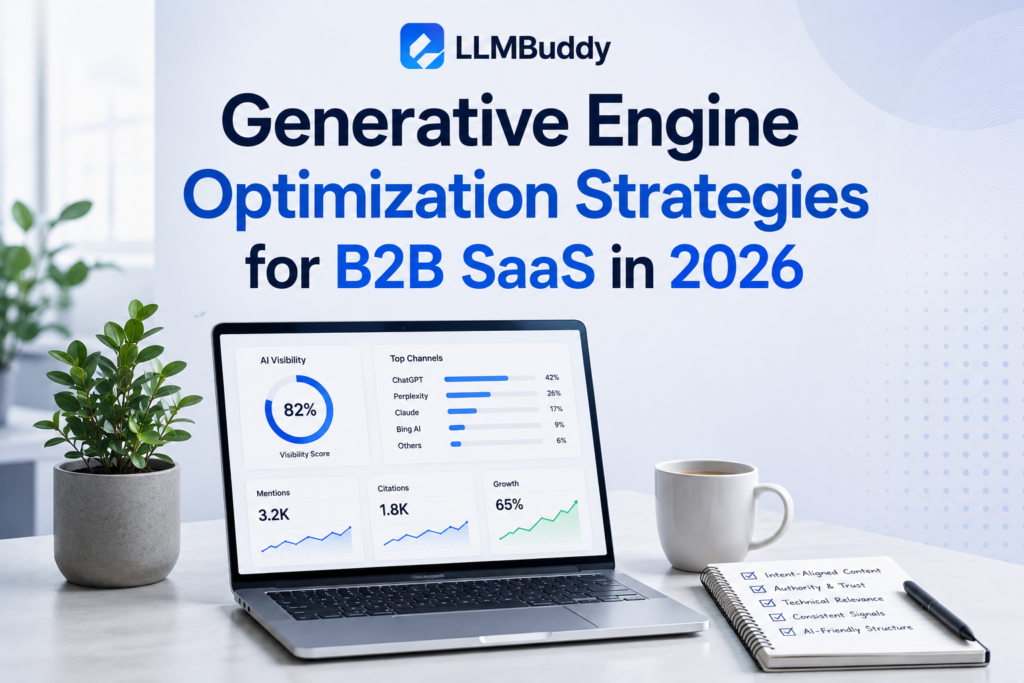
If you think your existing SEO stack can handle AI search, you’re using the wrong yardstick. Traditional platforms were built for blue-link rankings. AI assistants don’t work that way. ChatGPT, Gemini, Perplexity, Claude, and Google AI Overviews synthesize answers, cite sources selectively, and often end the journey before a click happens.
That changes what your team has to measure. You need entity clarity, citation coverage, prompt-level visibility, and repeatable monitoring across more than one engine. The market moved fast after ChatGPT launched in November 2022, then accelerated again with Google’s AI Overviews in 2024. By 2026, independent GEO roundups were already describing platforms that monitor more than 10 AI engines, which tells you how quickly this shifted from an SEO side project into an operating layer for growth teams (Try Profound’s GEO tools roundup).
For Indian B2B SaaS leaders, the wrong advice is to buy the broadest dashboard and call it a strategy. That’s lazy. The core question is simpler. Which of the top generative engine optimization platforms for AI help your brand show up in buying conversations, and which ones just give you another reporting screen?
At LLMBuddy, we’ve seen this firsthand in client programs. Chargebee improved AI visibility by +74%, Whatfix by +84%, and Keka by +82%. Those outcomes came from execution, not rank tracking. If your goal is pipeline, pick a platform based on strategic fit, not on who lists the most features.
1. LLMBuddy
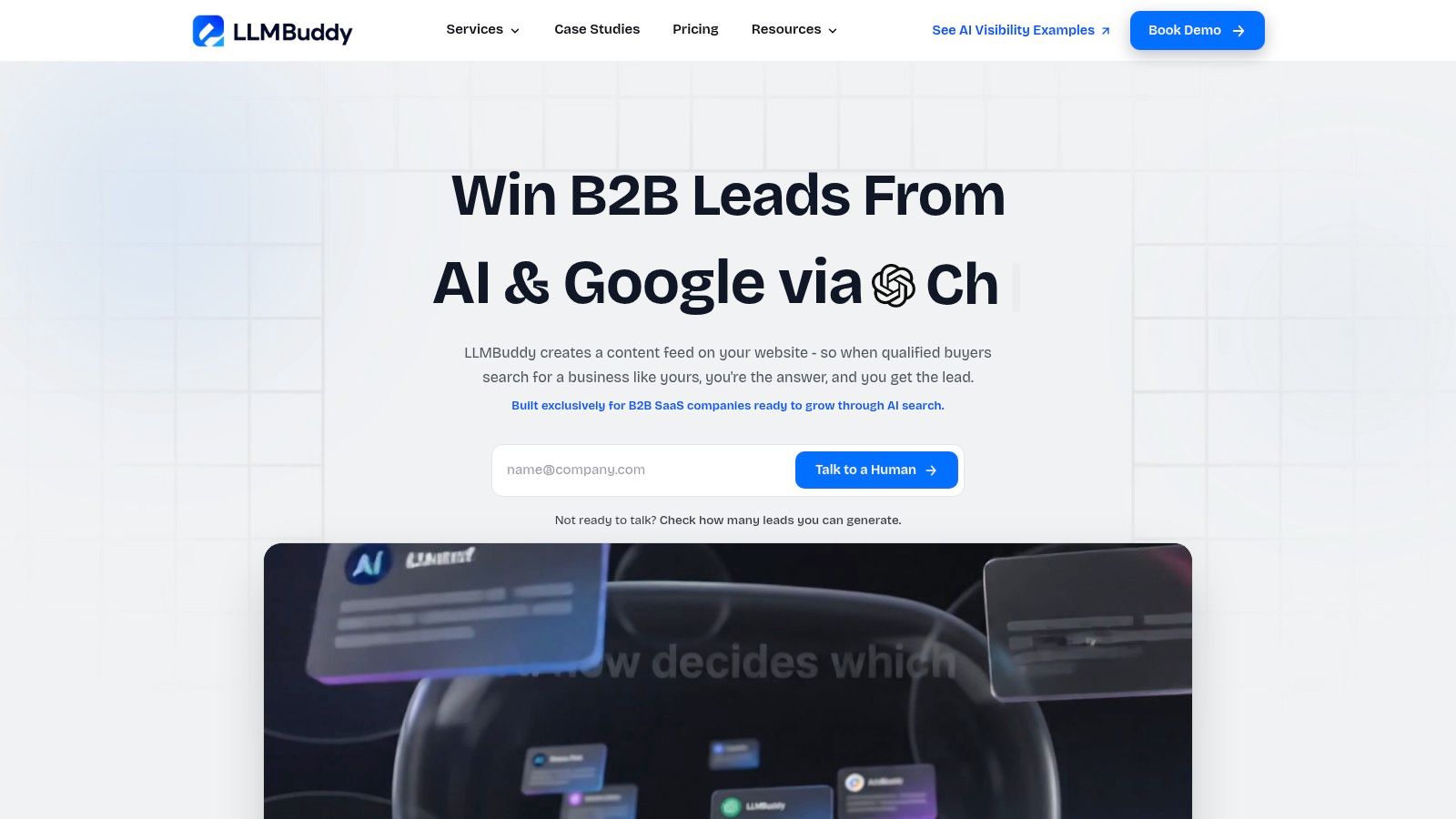
If you’re an Indian B2B SaaS company, this is the strongest option on the list because it isn’t just software. It’s execution tied to revenue goals. LLMBuddy is built specifically for SaaS brands that need to become the recommended answer inside ChatGPT, Gemini, Perplexity, and Claude, not just monitor mentions after the fact.
That difference matters. Most GEO platforms stop at visibility reporting. LLMBuddy combines technical fixes, entity work, content restructuring, and citation pathway development with an ongoing monitoring layer. If your CMO asks, “Who’s going to do the work after the dashboard flags a problem?” this model answers that immediately.
Why it fits SaaS growth teams
We don’t treat GEO as an extension of content marketing. We treat it as a demand capture system. The workflow starts with an audit, then moves into entity mapping, llms.txt and schema work, retrieval-friendly page architecture, source alignment, and weekly monitoring through our Generative Engine Optimization program.
For B2B SaaS, that’s the right stack because buyers ask AI assistants comparative, high-intent questions. They don’t ask for your latest blog post. They ask which vendor is best for a use case, region, integration need, pricing model, or team size. If your site and off-site presence aren’t structured for that, you won’t get cited.
Practical rule: If your team needs both measurement and intervention, don’t buy a tool that only tells you you’re invisible.
Where LLMBuddy is strongest
The biggest advantage is focus. We work on SaaS buying journeys, not ecommerce catalogs or local listings. That’s why the outputs map to business outcomes. Chargebee saw +74% AI visibility growth and +72% inbound leads. Whatfix grew AI visibility by +84%. Keka improved by +82%. You can review how we approach these programs in our case studies.
A few things stand out:
- Execution included: Your team doesn’t need to translate dashboards into a separate workstream.
- SaaS-specific methodology: Review sites, product pages, integration pages, comparison pages, and solution pages get treated as citation assets.
- Cross-engine focus: Work is built around ChatGPT, Gemini, Perplexity, and Claude, not just Google.
The tradeoff is obvious. If you’re looking for a cheap self-serve app, this isn’t it. If you’re running a consumer brand or a marketplace, the fit is weaker. But for Indian SaaS firms trying to win AI-led buyer discovery, this is the only option here built around the full job.
2. BrightEdge
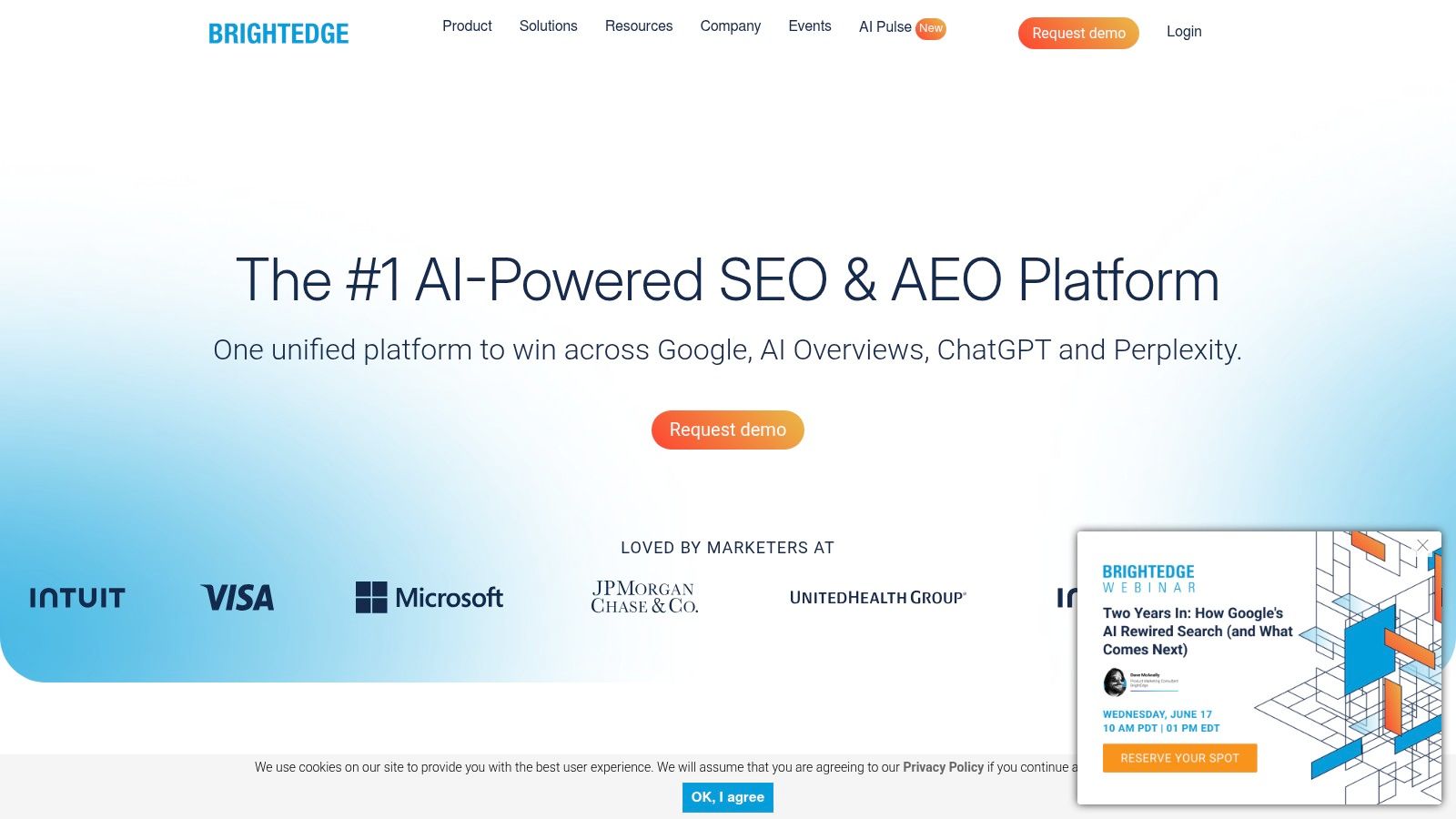
BrightEdge makes sense if your organization is heavily exposed to Google and already runs a mature enterprise SEO program. Its main value in GEO is not broad AI assistant coverage. It’s depth on Google AI Overviews.
That makes BrightEdge a strong fit for public companies, large SaaS suites, and multi-market brands that need boardroom-grade reporting on how Google’s answer layer is changing visibility. If your traffic model still depends on Google, BrightEdge deserves a serious look.
Where BrightEdge wins
BrightEdge was an early mover on AI Overviews monitoring. The platform is known for parsing AIO behavior and helping teams understand which sources are cited and where category patterns are shifting. For enterprises with existing SEO ops, that’s useful because it plugs into a workflow your team already understands.
The limitation is equally clear. If your AI search strategy includes ChatGPT, Perplexity, or Claude as first-class channels, BrightEdge alone won’t give you the full picture. It’s best as a Google-heavy intelligence layer, not as your whole GEO strategy.
For teams already investing in classic organic search, it can pair well with a dedicated AI SEO services program that closes the gap between reporting and implementation.
BrightEdge is a strong enterprise parser for Google’s answer layer. It is not the best choice if your category buying conversations are happening across several AI assistants.
Best fit
- Best for: Enterprise SEO teams with high Google dependence
- Avoid if: You need hands-on GEO execution or broad cross-engine intervention
- CMO verdict: Buy it if your reporting problem is bigger than your execution problem
3. seoClarity
If you manage several domains, multiple regions, and a large internal SEO team, seoClarity is one of the safer enterprise picks. It extends a familiar SEO governance model into AI visibility tracking, which makes adoption easier for companies that already operate at scale.
That’s the good news. The less flattering reality is that seoClarity still behaves more like an enterprise monitoring layer than a true GEO execution system. It helps you see the change. It doesn’t by itself help you cause the change.
Why large companies like it
seoClarity works best in complex environments where standardization matters. If your company has country sites, product lines, subfolders, and regional teams, the platform fits that complexity better than lightweight GEO tools do. It supports the kind of internal reporting structure global marketing teams need.
For an India-headquartered SaaS company with major expansion in the US and UAE, that matters. One of the most under-discussed GEO problems is reliability across engines, markets, prompt wording, and local context. Independent coverage of the category has pointed out that buyers need to know whether platform measurements remain stable enough for multi-market execution, especially outside the U.S. (Cognizo’s GEO tools review).
The real tradeoff
seoClarity is expensive in effort even before pricing enters the conversation. Your team needs process maturity to get value from it. If you don’t have owners for content, technical SEO, entity governance, and reporting, the platform can become shelfware.
Use seoClarity if your internal machine is already strong. Skip it if you’re hoping the tool itself will create the machine.
- Best for: Large SaaS organizations with multiple markets and domains
- Weak point: Heavy on measurement, light on intervention
- CMO verdict: Good for governance. Not enough on its own for AI recommendation growth.
4. SISTRIX
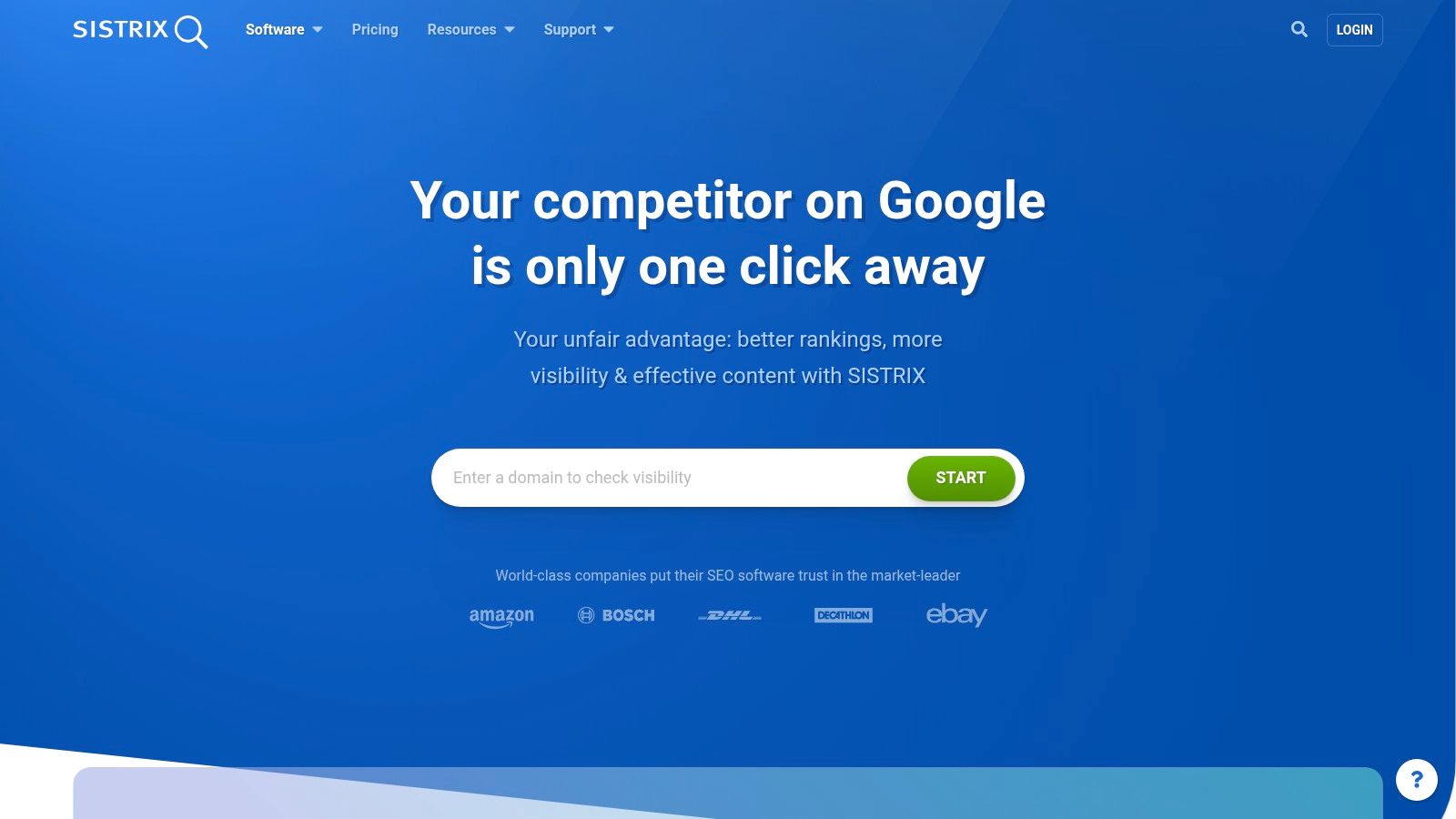
SISTRIX earns its place for one reason. It gives you disciplined visibility into how Google is reshaping category discovery across countries, without forcing your team into a bloated enterprise workflow.
That matters for Indian B2B SaaS companies selling into Europe or running regional search programs across the UK, DACH, and the Middle East. If your pipeline still depends heavily on Google-led education, SISTRIX helps you see where AI Overviews are changing the click path and which markets are drifting first. We have seen this matter in expansion planning for SaaS brands where regional search behavior affects demo flow far earlier than CRM reports reveal.
Where SISTRIX fits
SISTRIX is strongest when your GEO question is narrow and commercially relevant. Are AI Overviews appearing for your core commercial terms? Which countries show the biggest shift? Which pages are losing visibility because Google is answering the query itself?
It handles that job well.
For a CMO, that makes SISTRIX a fit analysis tool, not a full GEO operating system. It is useful when your team needs clean market-by-market reporting for Google and wants to connect those changes to pipeline risk. If your board conversation is about protecting branded and non-branded demand in search, this is the kind of platform that helps you frame the issue clearly.
Where it falls short
SISTRIX does not solve the broader AI discovery problem. It is still centered on Google behavior. That leaves a gap if buyers in your category are shortlisting vendors through ChatGPT, Perplexity, or other assistants before they ever reach your site.
For Indian SaaS leaders, that distinction matters. The right question is not whether you rank in Google. The right question is which engine shapes buyer memory in your target market. If Google still carries the category narrative, SISTRIX is useful. If AI assistants are already influencing comparison and recommendation flows, you need broader diagnostics from an AI search audit.
My recommendation
- Best for: Indian B2B SaaS teams tracking Google AI Overview impact across multiple countries
- Weak point: Limited value for assistant-led discovery outside Google
- CMO verdict: Buy SISTRIX if Google visibility still drives a meaningful share of pipeline. Skip it as your primary GEO platform if your growth plan depends on being recommended across AI assistants, not just seen in search.
5. Semrush
Semrush is the default option for teams that don’t want another standalone platform. If your marketing org already lives inside Semrush, adding AI visibility features feels operationally easy. That’s why many mid-market SaaS teams start here.
The problem is depth. Semrush is trying to be your SEO suite, research suite, competitive suite, and now your GEO suite. That’s convenient. It doesn’t always mean it’s the best tool for the hardest GEO jobs.
Where Semrush helps
Semrush is attractive because it brings AI visibility into a system your team already knows. It has positioned itself around monitoring presence across AI environments including Google AI Overviews, ChatGPT, Gemini, and Perplexity. For a lean team, that reduces onboarding friction.
That broad coverage matches where the GEO category is going. Independent 2026 reviews note that enterprise GEO tools increasingly combine citation tracking, share-of-voice reporting, competitor benchmarking, and multi-model coverage across systems like ChatGPT, Perplexity, Gemini, and Google AI Overviews, which shows the category has matured into a data-heavy measurement layer rather than just a content toolkit (Yotpo’s GEO tools analysis).
Where Semrush falls short
Semrush is strongest as a unification play. It is weaker as a specialist GEO operating system. If your main need is to benchmark visibility while keeping SEO and AI reporting together, it’s a reasonable buy. If your main need is to engineer better AI recommendations, you’ll hit its limits.
Don’t confuse having AI metrics inside your SEO suite with having a real GEO program.
- Best for: Mid-market teams consolidating tools
- Weak point: Broad, not deep
- CMO verdict: Good starter layer. Rarely enough for category leadership.
6. Yext
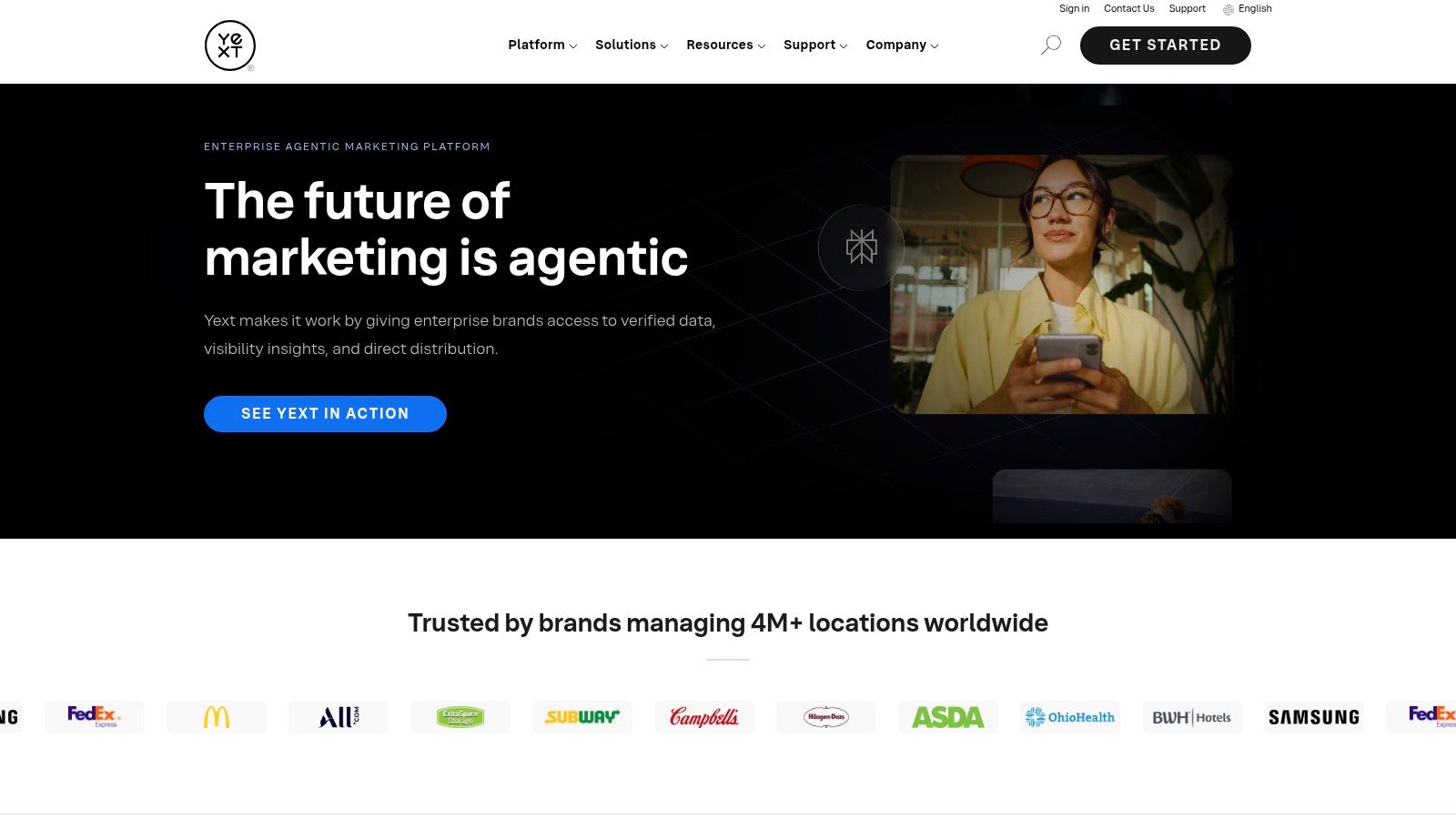
Yext matters more in GEO than many SaaS marketers assume. AI systems don’t just read your website. They reconcile entity signals across the web. If your brand facts are inconsistent, incomplete, or weakly connected, your recommendation quality suffers.
That’s where Yext has a real edge. It has spent years solving structured brand data distribution. In an AI visibility context, that’s not a side benefit. It’s one of the foundations.
Why Yext deserves a place on this list
Yext is strongest for companies where entity consistency matters across many surfaces. Think product lines, locations, knowledge bases, profiles, and brand-controlled data objects. If your organization struggles to keep its core information aligned, Yext can clean up a lot of what AI assistants ingest.
For pure-play B2B SaaS, the fit depends on your complexity. If you sell one product with a simple positioning story, Yext may be more infrastructure than you need. If you operate several solutions, brands, or regional footprints, it becomes more relevant.
The right use case
Use Yext to strengthen the structured layer of your GEO program. Don’t expect it to solve content strategy, comparative answer positioning, or category-level citation growth on its own.
That means Yext works best in combination with a team that knows how to turn entity consistency into recommendation wins. On its own, it’s a data hygiene engine.
- Best for: Brands that need stronger entity consistency and managed data
- Weak point: Less focused on unstructured content and buying-journey narratives
- CMO verdict: Strong foundation tool. Not a full-market leadership tool by itself.
7. Authoritas
Authoritas is a better choice than its brand visibility suggests. It doesn’t get as much attention as the biggest names, but for teams that want SERP intelligence plus AI presence data in one environment, it’s a credible option.
I’d classify it as a strong analyst’s platform. If your team likes APIs, custom reporting, and detailed search environments, Authoritas gives you room to work.
Why it stands out
Authoritas has expanded into monitoring brand presence across major AI assistants while also detecting Google AI Overviews through its SERPs API. That makes it useful for teams trying to reduce tool sprawl without abandoning classic search intelligence.
The catch is strategic guidance. Authoritas can help you inspect the problem in detail. It won’t necessarily tell your team how to fix the underlying entity, content, and citation gaps. That work still needs a real operator.
Best use
This is a fit for technically mature SaaS teams with in-house analysts. If you’re trying to centralize SEO and AI visibility data into custom dashboards, Authoritas can do that. If your growth team is small and needs direction, it can feel too abstract.
- Best for: Technical teams that want API-friendly visibility data
- Weak point: Limited intervention layer
- CMO verdict: Smart buy for analysis-heavy teams. Weak fit for founder-led teams that need speed.
8. WordLift
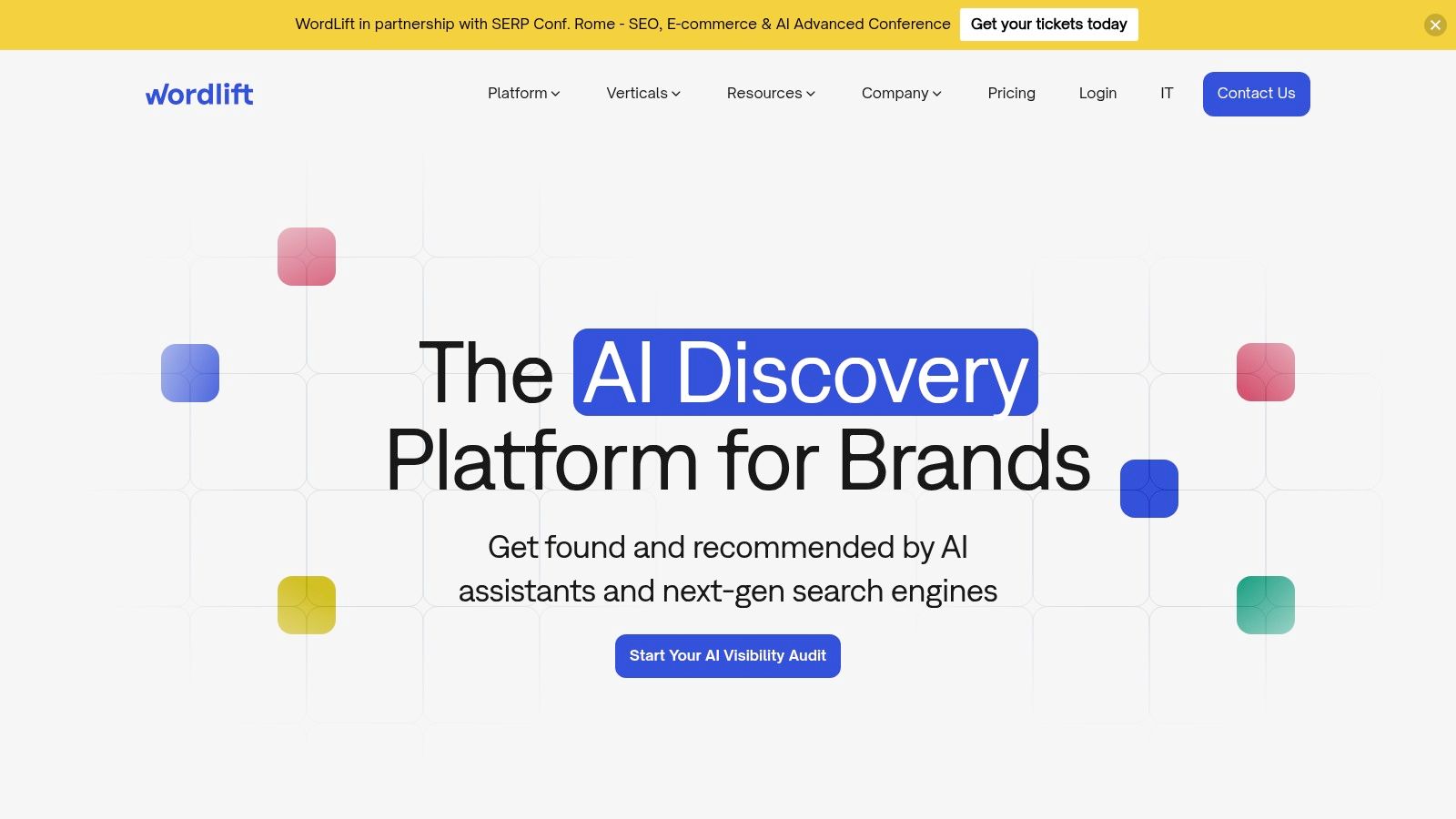
WordLift is one of the few tools on this list that attacks a real GEO problem at the semantic layer. It helps your site express entities, relationships, and structured meaning more clearly. That’s useful because AI engines don’t rank pages the way classic search did. They infer, retrieve, summarize, and cite.
If your content library is large but semantically messy, WordLift can improve the machine-readable foundation.
What WordLift does well
WordLift focuses on schema, knowledge graph construction, and entity modeling. For SaaS brands with years of content debt, that can be the right first move. Before you chase AI mentions, you need your website to clearly state what your product is, who it serves, what problems it solves, and how related concepts connect.
This is especially useful for companies whose blog strategy created volume without clarity. We see that often in audits. The brand has dozens or hundreds of pages, but the product entity is weak, comparison logic is scattered, and supporting pages don’t reinforce the same semantic model.
That’s where AI content optimization becomes the companion motion. WordLift helps define the graph. Your team still has to rewrite the pages so AI assistants can extract and trust the right answers.
WordLift is not a magic switch. It works when your information architecture and editorial model are already moving in the same direction.
Recommendation
- Best for: Semantic cleanup and schema-driven site foundations
- Weak point: Doesn’t solve off-site authority or category recommendation positioning
- CMO verdict: Strong technical layer for content-rich SaaS sites
9. InLinks
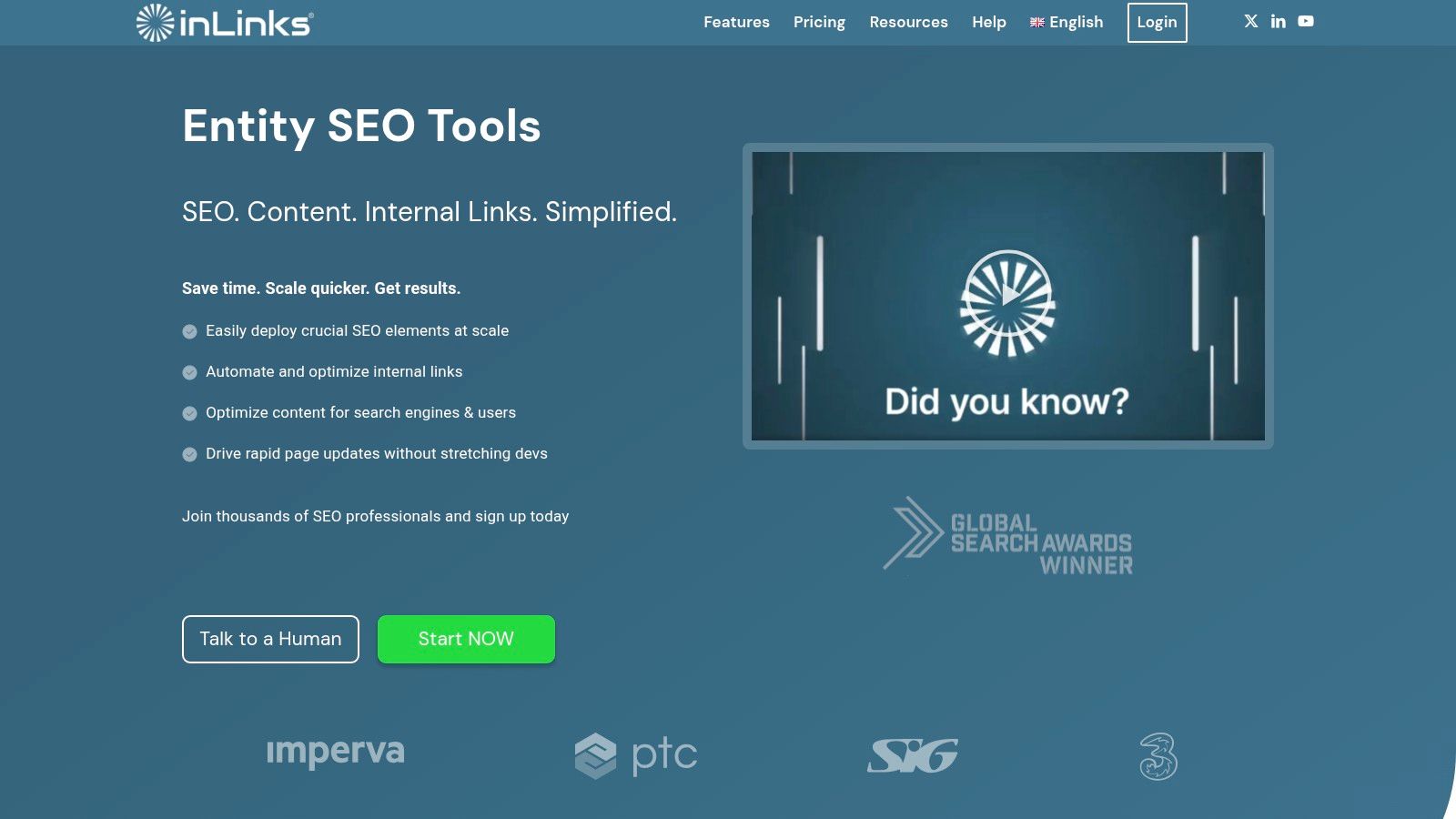
InLinks is one of the more tactical tools here. It’s built around entity understanding, internal linking, and schema support. That sounds narrow. In practice, it solves a very common SaaS problem. Your site has relevant pages, but they don’t reinforce each other in a way machines can easily parse.
For GEO, that matters. Internal structure affects retrieval. If your solution pages, use case pages, integrations, comparisons, and documentation don’t connect semantically, your site sends a weak signal.
Where InLinks earns its place
InLinks helps teams scale entity-based internal linking without manually orchestrating every connection. For lean content teams, that’s useful. It can improve how your content graph is expressed, which supports better machine readability.
It’s not an executive platform. It’s a practitioner tool. The interface and pricing model won’t appeal to every enterprise team, but practitioners often get real value from it because it makes structural improvements easier to implement.
My view on fit
If your team already knows what entities and topic clusters matter, InLinks can help operationalize that model. If you don’t know your entity strategy yet, the tool won’t invent one for you.
- Best for: Content teams fixing internal semantic structure
- Weak point: Less polished than enterprise platforms
- CMO verdict: Good support tool for execution. Not a strategic command center.
10. Kalicube Pro
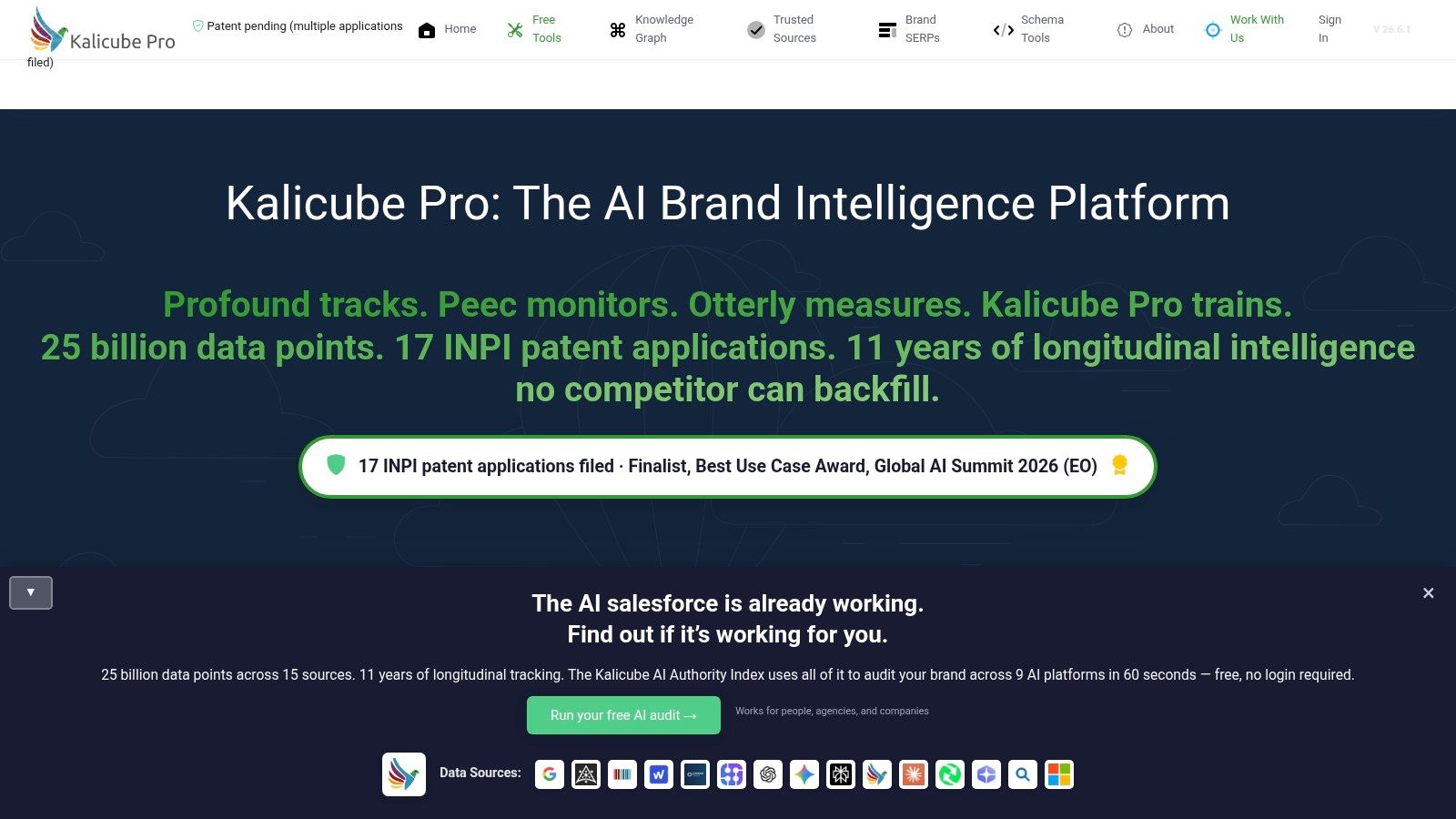
Kalicube Pro takes an entity-first view of search and AI visibility. That’s a smart angle because AI systems don’t just index pages. They build a representation of your brand. If that representation is vague, inconsistent, or confused with adjacent categories, your recommendation potential drops.
For founders and CMOs, Kalicube’s value is conceptual clarity. It pushes your team to define the brand entity properly and align signals around it.
Where Kalicube is strongest
Kalicube is good for brand entity governance. It helps companies establish what their brand means, what it should be associated with, and which signals support that understanding across the web. For a SaaS company going through repositioning, category creation, or market expansion, that can be highly useful.
This maps to a broader market shift. Independent market research projects the global GEO market will reach USD 1,089.3 million by 2026 and expand at a 40.6% CAGR, a sign that buyers increasingly want software for AI visibility measurement, citation monitoring, and content readiness rather than one-off experimentation (Dimension Market Research GEO market report).
The practical limit
Kalicube is not the tool I’d pick if your immediate problem is execution across product pages, docs, reviews, comparison pages, and third-party citations. It’s strongest as a discipline around brand understanding. You still need operational muscle to turn that into category recommendation wins.
- Best for: Entity governance and brand definition
- Weak point: Less direct on page-level and off-site execution
- CMO verdict: Strong strategic layer for brands with entity confusion or repositioning work
Top 10 Generative Engine Optimization Platforms, Feature Comparison
| Provider | Core offerings | Quality & outcomes (★) | Value / USP (✨) | Target audience (👥) | Pricing (💰) |
|---|---|---|---|---|---|
| LLMBuddy 🏆 | Full-service GEO: AI Search Audit, llms.txt, schema, content & citation engineering + proprietary AI Visibility Platform | ★★★★☆ +87% avg visibility (~90d); documented pipeline uplift | ✨ Execution + monitoring: hands‑on implementation + engineered citation pathways | 👥 Mid-market → Enterprise B2B SaaS (India, US, UAE) | 💰 Custom; free initial AI Visibility Audit |
| BrightEdge | Generative Parser for Google AIO; content, keyword & technical SEO modules | ★★★★☆ Pioneer in AIO insights; enterprise reporting | ✨ Deep AIO analytics & C‑suite reporting | 👥 Large enterprise SEO teams | 💰 Enterprise, quote-based |
| seoClarity | AI Mode tracking; large‑scale crawling; unified AI & traditional SEO reporting | ★★★★☆ Strong for multi‑domain, multi‑market scale | ✨ Scale + integration into established SEO workflows | 👥 Global B2B companies with many domains | 💰 Enterprise, quote-based |
| SISTRIX | Centralized AIO Hub; international SERP & country coverage | ★★★☆☆ Reliable international AIO tracking | ✨ Excellent multi‑country SERP analytics | 👥 Agencies / teams managing international campaigns | 💰 Modular pricing by toolsets/countries |
| Semrush | Position Tracking AIO; multi‑platform visibility (ChatGPT, Gemini, Perplexity); content tools | ★★★☆☆ Broad, evolving AI visibility features | ✨ All‑in‑one SEO + emerging AI visibility suite | 👥 Marketing teams already in Semrush ecosystem | 💰 Tiered subscription (can scale costly) |
| Yext | Yext Scout for AI visibility; schema & structured data management; citation metrics | ★★★★☆ Strong control of first‑party entity signals | ✨ Knowledge Graph + consistent entity data for AI citations | 👥 Multi‑location, marketplaces, entity‑heavy B2B | 💰 Enterprise, quote-based |
| Authoritas | Brand monitoring across assistants; SERPs API with AIO detection | ★★★☆☆ Good combined SEO & GEO data; API access | ✨ Flexible API for custom BI & dashboards | 👥 Enterprise teams & agencies needing API feeds | 💰 Enterprise-grade / module pricing |
| WordLift | Automated Knowledge Graph, schema markup, AI content assistance & APIs | ★★★★☆ Excellent on‑site entity/schema foundation | ✨ Automates KG + schema to improve retrievability | 👥 Content‑heavy B2B sites and publishers | 💰 Public Business+ / Enterprise plans |
| InLinks | Semantic content analysis, entity disambiguation, automated internal linking & schema | ★★★☆☆ Scales entity linking; improves machine‑readability | ✨ Automates entity‑driven internal linking at scale | 👥 Teams with large content libraries | 💰 Usage/credit‑based pricing |
| Kalicube Pro | Entity & brand SERP intelligence; methodology for Knowledge Panels & consistent signals | ★★★★☆ Strong entity‑first methodology | ✨ Focused playbook for defining brand entities | 👥 Brands/executives investing in long‑term entity mgmt | 💰 Quote-based / consultative |
Your Next Step From Monitoring to Market Leadership
Indian B2B SaaS teams do not need another GEO dashboard. They need a platform choice that changes pipeline.
That is the core buying decision. Engine coverage, screenshot-heavy reporting, and prompt counts look useful in a category review. They do not answer the question a CMO owns: will this platform help your brand show up more often in high-intent AI recommendations, and will that show up in demos, branded search, and influenced revenue?
Independent analysis has made that gap clear. Many GEO tools are strong on monitoring and weak on action, attribution, or workflow impact (SE Ranking Visible GEO tools review). That matters more for Indian SaaS companies than it does for large global teams because your content, SEO, and demand gen functions usually run lean. If the platform stops at reporting, execution stalls.
Use a simple filter.
BrightEdge, seoClarity, SISTRIX, Semrush, and Authoritas are good fits for enterprises that need governance, reporting depth, and GEO visibility inside an established SEO operation. WordLift, InLinks, Yext, and Kalicube Pro are better for teams fixing entity structure, schema, and machine readability. Those are valid investments. They are rarely enough on their own.
For Indian B2B SaaS leaders focused on pipeline, the winning choice is usually the platform that connects visibility data to execution priorities. That is the lens we use in client work with companies like Chargebee and Keka. We do not score tools by how many AI engines they monitor. We score them by whether they help your team improve recommendation visibility for comparison queries, alternative queries, integration queries, pricing queries, and category-level prompts that influence shortlisted demand.
That is why execution-led GEO deserves separate treatment.
The common failure pattern is predictable. A SaaS brand has solid classic SEO, but weak entity definition, thin comparison pages, poor retrieval formatting, and no clear plan for earning corroborating mentions across sources AI systems trust. The result is inconsistent visibility in assistant answers, especially in the prompts that matter late in the buying journey.
Start with a baseline across your highest-intent prompt sets. Then make an honest call on operating capacity. If your team cannot translate findings into content changes, page architecture updates, entity cleanup, and citation-building priorities within the same quarter, do not buy a reporting layer and call it strategy.
Choose the platform that gets you from diagnosis to action fastest.
If you want a direct read on where your brand stands in AI search, talk to LLMBuddy. We’ll map your visibility across ChatGPT, Gemini, Perplexity, and Claude, show where competitors are winning recommendation share, and give you a concrete path to improve it through a customized request demo.
Composed with Outrank