
You've done the SEO work. Your B2B SaaS ranks on page one for terms your team cares about. Then you open ChatGPT, ask for the best solution in your category, and your brand is nowhere. Your top competitors show up. You don't. That gap is exactly why so many Indian SaaS founders are asking about 7 reasons your competitors appear in ChatGPT but you don't.
We hear this every week at LLMBuddy. Google rankings still matter, but AI visibility runs on a different system. My name is Ankur Pandey, and our audits at LLMBuddy show the same pattern again and again: success in ChatGPT, Gemini, Perplexity, and Claude comes from machine-readable structure, external validation, and clear entity signals. It's not just about writing more content. It's about building a data footprint machines can trust.
1. Your Content Isn't Structured for LLM Extraction
Most SaaS sites still write for humans first and machines second. That used to be fine. It isn't anymore. AI assistants extract, compress, and cite information from pages that are easy to parse. If your most important claims sit inside long brand-heavy paragraphs with no schema, no FAQ blocks, and no clear definitions, you've made your own site hard to quote.
That matters because structured data changes citation behavior. Moonrank's AI visibility analysis says structured data and schema markup can increase citation rates by up to 45%, and the gain reaches a 2–3x citation boost when combined with FAQ schema. If your competitor has cleaner extraction paths, ChatGPT will often cite them even if your product page says something similar.
What machines need from your page
Chargebee is a good example of what “citation-ready” looks like in practice. In our work with similar B2B SaaS content patterns, we've seen brands like Chargebee, Whatfix, and Keka gain visibility after reworking comparison pages, product definitions, and documentation into formats AI systems can lift directly. At LLMBuddy, we've seen this with clients including Chargebee, where visibility increased by 74%, Whatfix, where mentions rose by 84%, and Keka, where visibility improved by 82%.
Practical rule: Put the definition in the first lines, the differentiators in scannable sections, and the FAQs where a model can quote them.
Start with your top commercial pages. Product, pricing, comparison, alternatives, integrations, and documentation pages usually matter more than generic blog posts. Then tighten the page structure.
- Define the category clearly: Write a direct opening sentence that states what your product is, who it serves, and the problem it solves.
- Add schema where the claim sits: Product, Organization, FAQPage, and review-related markup help machines identify what's factual.
- Create extraction-friendly summaries: Use short answer blocks, tables, and list sections instead of burying everything in narrative copy.
If you need a place to start, review your key pages against LLMBuddy's AI content optimization approach. Then ask ChatGPT to extract facts from those URLs. If the answer comes back vague, your page structure is weak.
2. You Lack Third-Party Citations on Authority Platforms
Your category page is polished. Your product is stronger. Your competitors still get named in ChatGPT.
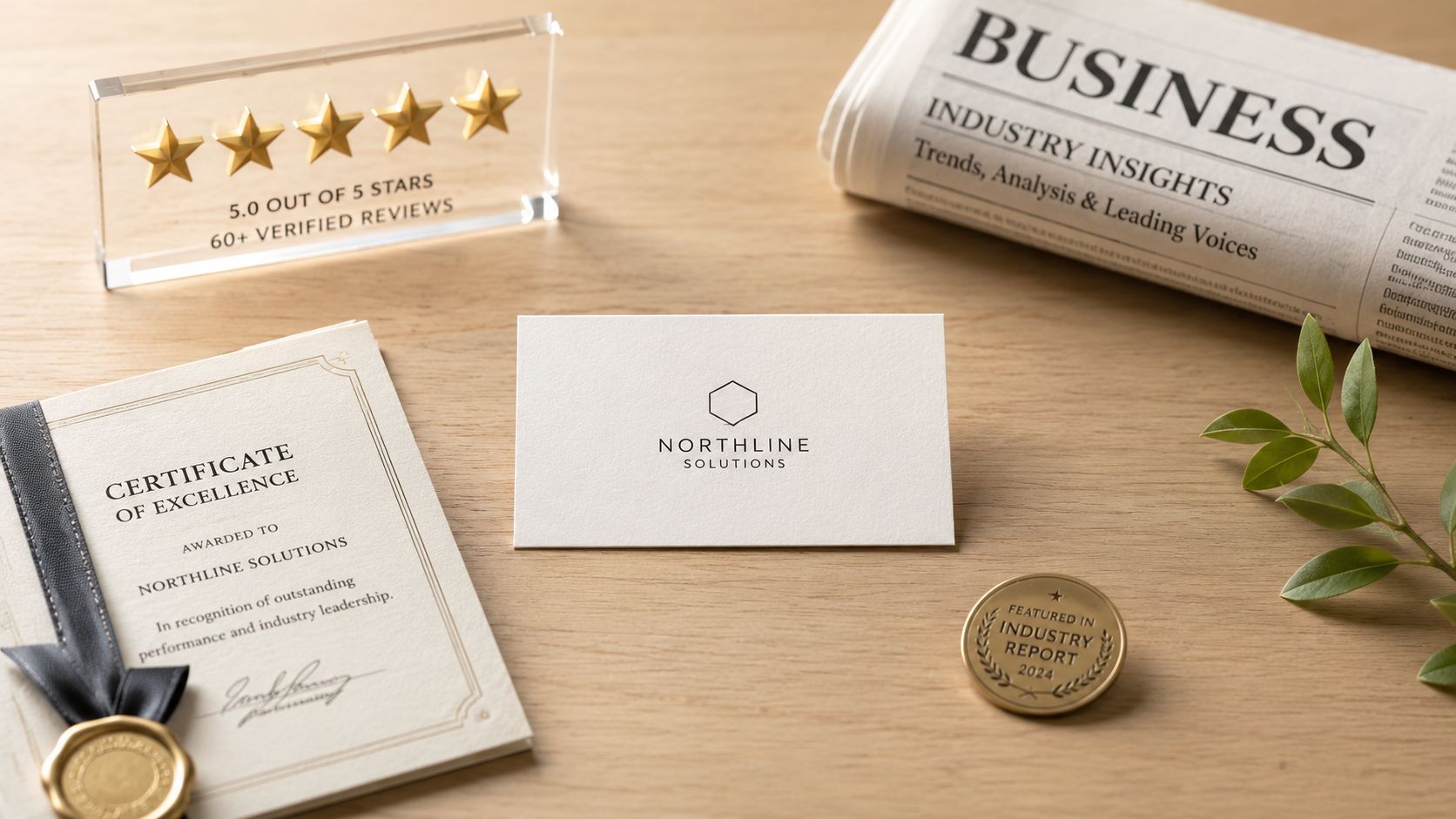
The reason is simple. LLMs do not rely on your website alone. SearchIntel's research on why brands don't show up in AI answers found that 91% of citations in AI-generated answers come from third-party sources, including G2, Trustpilot, Reddit, news coverage, and industry publications. If your credibility only exists on your own domain, you have not given the model enough external proof to cite you.
This is one of the clearest patterns we see at LLMBuddy across Indian SaaS. Brands that appear in AI answers usually have three things working together. Strong review platform coverage, repeated mentions on relevant publications, and real discussion in communities where buyers compare tools. Brands that stay invisible usually overinvest in owned content and underinvest in independent validation.
Where your competitors are winning
Keka is a useful example. Their visibility did not improve because they published another generic opinion piece. It improved because the brand kept showing up across review ecosystems, listicles, comparison conversations, and third-party references that models already trust as corroboration. We see the same pattern in accounts we manage for companies like Chargebee and Whatfix. External proof changes recommendation frequency faster than another homepage rewrite.
This is the remediation sequence we recommend to SaaS leaders.
- Fix your review platform presence first: Complete your G2 profile, tighten category positioning, and get recent, specific reviews that mention use case, team size, implementation experience, and outcomes.
- Earn citations on places buyers already trust: Target trade publications, analyst-style roundups, expert newsletters, and comparison posts that name vendors directly.
- Audit community visibility: Check Reddit, Quora, Slack groups, and founder or operator communities where people ask for alternatives and implementation advice.
- Close proof gaps: If third-party pages mention competitors with pricing context, migration support, integrations, or customer outcomes, make sure equivalent proof exists for your brand too.
Do not treat this like PR. Treat it like citation engineering.
If you want AI systems to recommend your product, give them independent sources that confirm you exist, define what you do, and explain why buyers choose you. Without that, stronger competitors with weaker products will keep outranking you in AI answers.
3. Your Entity Definitions Are Weak or Nonexistent
AI models don't just read pages. They recognize entities. Your company, founders, product names, category labels, and market position all need to resolve cleanly into a consistent identity. If your website says one thing, LinkedIn says another, Crunchbase uses a different phrasing, and review platforms describe you loosely, the model treats your brand as low confidence.
Many Indian SaaS companies often slip. Bootstrapped brands often grow fast without cleaning up company facts. Series-funded brands usually do this earlier because analysts, investors, and media force consistency. That's one reason a newer or smaller competitor can look “bigger” in AI answers than you do.
Clean identity beats noisy identity
Chargebee is a useful benchmark because its company identity is easy for machines to interpret. Its company name, category, leadership references, and recurring billing positioning are consistently reinforced across the web. Slack has the same advantage. A model can confidently connect the brand to workplace communication because the definitions are stable.
At LLMBuddy, this is one of the first things we audit. We've seen brands with plenty of content fail because the machine can't confidently answer basic questions like: What category are you in? What is the product called? What exact problem do you solve?
If a model can't define your brand in one clean sentence, it won't recommend you in a buying query.
Fix this with a company facts layer on your site and consistency across external profiles.
- Standardize your company description: Use the same category wording across homepage copy, LinkedIn, G2, Crunchbase, and press profiles.
- Mark up your organization details: Add Organization schema with founding date, founders, headquarters, and product category.
- Create one canonical version of your brand facts: Your team should know the exact phrasing for company name, product name, and category descriptors.
This sounds basic. It isn't. It's one of the most common causes of AI invisibility.
4. Your Topical Authority Is Fragmented or Misaligned
A surprising number of SaaS teams still publish content like a general business blog. One month it's hiring advice. Next month it's generic productivity tips. Then a broad AI trend post. None of that helps if you want ChatGPT to associate your brand with a narrow commercial problem.
The deeper issue is topic association. Waikay's analysis of AI competitive mapping highlights the “missing topic associations” problem. AI systems often fail to connect a brand to a relevant concept because the brand hasn't built strong semantic links around use cases, standards, attributes, or comparisons. That same analysis says 87% of AI-recognized brands appear in at least three comparison posts, while invisible brands average less than one.
That's why competitors you barely know can show up for “best CRM for B2B SaaS in India” or “[competitor] alternatives” while you don't. They've taught the model where they belong.
Build topic ownership, not content sprawl
Chargebee owns recurring billing, subscriptions, and billing automation. Notion owns note-taking, knowledge management, and team collaboration. HubSpot owns inbound marketing, CRM, and sales workflows. They don't win by publishing everywhere. They win by repeatedly reinforcing the same commercial topics from multiple angles.
Your fix is direct. Pick the few themes your product should own and build density around them.
- Choose a small topic set: Most B2B SaaS companies should focus on three to five commercial themes.
- Create comparison and alternatives content: These formats teach AI systems how your brand fits buyer decision prompts.
- Link your content in topic clusters: Product pages, use cases, documentation, and comparisons should reinforce the same semantic territory.
A founder in Chennai or Bengaluru doesn't need another broad “future of work” article. You need content that makes the model associate your brand with the exact buying questions your market asks.
5. You're Not on Perplexity, Claude, or Gemini, Only ChatGPT Matters to You
If your team checks only ChatGPT, your diagnostic is incomplete. Buyers don't use one assistant. They move across ChatGPT, Gemini, Claude, and Perplexity based on habit, device, and task. Your competitor may be weak in one engine and dominant in another.
Behavior is already shifting; Column Five's AI search visibility report says 25% of B2B buyers now use generative AI tools over traditional search for vendor research. The same report argues that “Share of Answer” has become more important than click-based visibility for this stage of discovery. If you show up on Google but disappear inside AI-generated shortlists, you're losing a high-intent research moment.
Different engines, different retrieval habits
Perplexity tends to reward clear sourcing and recent references. Gemini pays close attention to entity confidence and Google-connected data layers. Claude often performs better when the content is nuanced, explanatory, and well organized. ChatGPT can pull from multiple patterns depending on the query and retrieval context.
At LLMBuddy, this is why we run multi-engine audits, not single-engine snapshots. We've seen B2B SaaS brands look decent in ChatGPT and almost invisible in Perplexity or Gemini. That's a serious blind spot.
Audit visibility across all four engines before you change anything. Otherwise, you're solving the wrong problem.
Your next step is straightforward. Map your top buyer prompts, run them across each engine, and compare who appears repeatedly. Then build remediation around the weakest engine first. LLMBuddy's AI visibility optimization work is built around that cross-platform diagnosis.
6. Your Knowledge Graph Entry Is Missing or Outdated
Gemini, in particular, performs better when your company is cleanly represented in Google's entity ecosystem. If your knowledge panel is missing, sparse, or outdated, you're asking Google-connected AI systems to trust incomplete identity data.
This often affects Indian SaaS firms that have grown across markets without cleaning up structured company information. The homepage may be current. Crunchbase may be stale. LinkedIn may use an older positioning statement. Founders may describe the company three different ways in podcasts and profile bios. The result is ambiguity.
Alexis Gardin's diagnostics on AI invisibility identifies four common causes that show up repeatedly across AI visibility problems: blocked AI bots, missing llms.txt, unstructured content, and weak authority signals. The same analysis notes that technical fixes such as enabling AI bot access and adding an llms.txt file can produce measurable visibility gains in weeks, while authority building takes longer.
Fix the technical layer first
When the crawl layer is broken, many teams waste time on content. A restrictive robots.txt file or aggressive Cloudflare setting can block AI crawlers outright. If that happens, your site may be effectively absent from retrieval, no matter how good your product page is.
For this reason, every AI visibility audit at LLMBuddy checks the technical foundation before we touch messaging. That includes llms.txt, bot access, schema health, and company entity consistency.
- Check crawl access: Review robots.txt and security settings that may block AI crawlers.
- Publish llms.txt: Add a clear machine-readable file that points to your core company and product pages.
- Refresh your public company records: Keep LinkedIn, Crunchbase, and your website aligned with current facts.
If your technical layer is messy, clean it before you publish another article. You can see how this fits into a broader generative engine optimization workflow.
7. Your Competitors Have Better Data, Case Studies, and Proof Points
AI systems cite what they can verify. If your competitor publishes original research, strong customer evidence, and tightly structured proof pages, they become easier to recommend. If your site only lists features and broad promises, you look thin.
One of the clearest signals here is originality. Stackmatix's AEO case study review shows that LLMs cite content as a primary source when it includes original first-party research and proprietary datasets, not just recycled industry commentary. That's the difference between being one more opinion and becoming a reference point.
Proof beats polished copy
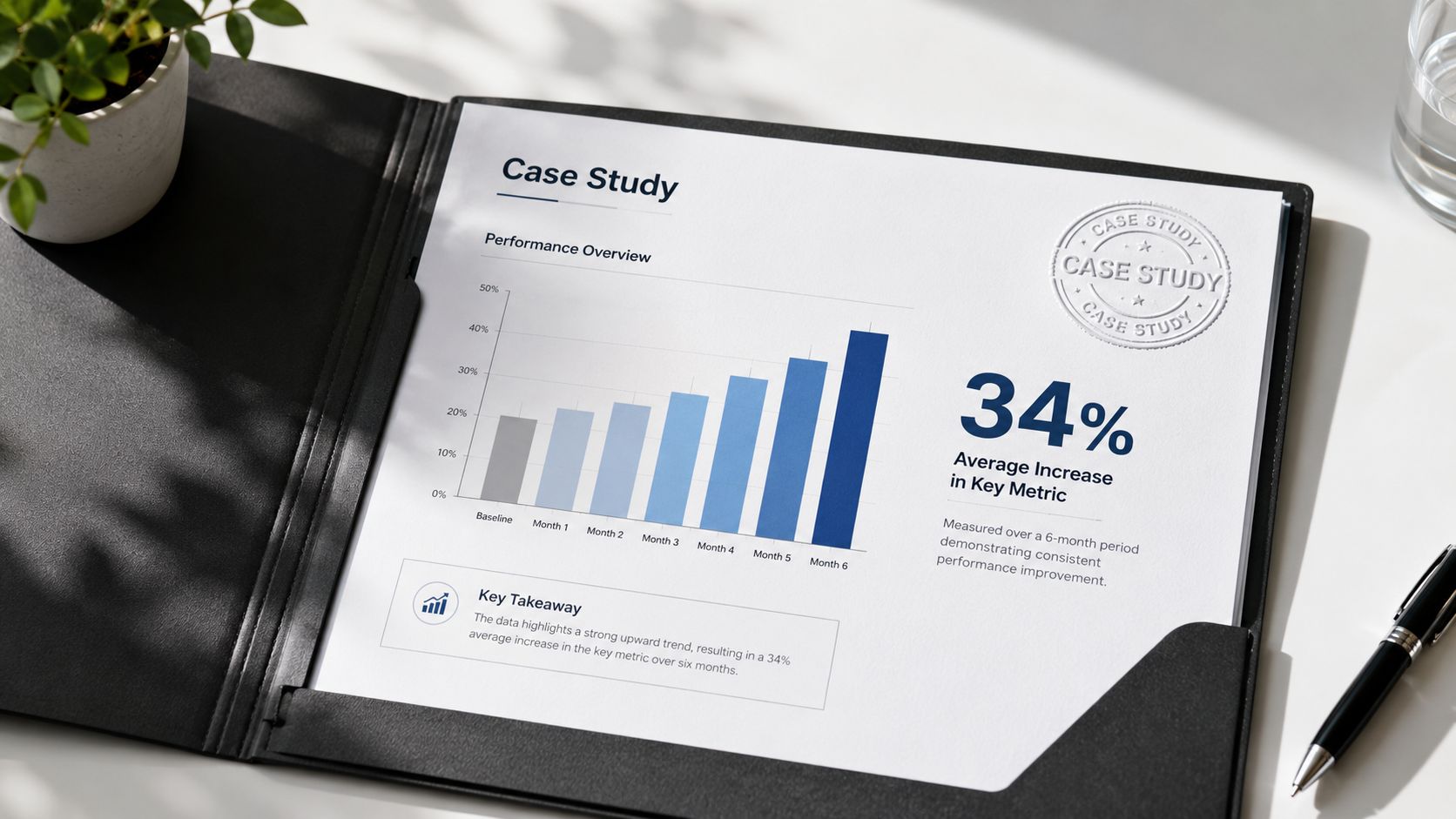
This is why Whatfix, Chargebee, and Keka are useful examples. Their strongest assets are not vague category pages. They're proof assets. Product comparisons, category education, customer stories, and structured pages that help a model answer buyer questions with confidence.
We see this in audits constantly. Brands with better evidence get cited more often even when their site design is weaker. Proof wins over polish.
- Publish original research: Benchmarks, trend reports, and first-party datasets give AI systems something distinctive to cite.
- Make case studies machine-readable: Use clear headings, fact blocks, outcomes, and schema on public customer stories.
- Reduce fluff in commercial pages: Put the strongest factual differentiators and evidence where a model can quote them.
If your case studies still read like sales brochures, rebuild them. If you want examples of the structure that works, review LLMBuddy's B2B SaaS case studies.
7-Point Comparison: Why Competitors Appear in ChatGPT
| Issue | Implementation Complexity 🔄 | Resource Requirements ⚡ | Expected Outcomes 📊 | Ideal Use Cases 💡 | Key Advantages ⭐ |
|---|---|---|---|---|---|
| Your Content Isn't Structured for LLM Extraction | Medium, developer/schema changes across templates | Low–Medium dev time + schema validation | Improved extractability and AI citations; measurable in 4–8 weeks | Product pages, pricing comparisons, FAQs | Improves both AI and traditional SEO; repeatable technical fix |
| You Lack Third-Party Citations on Authority Platforms | Medium, outreach, PR and review campaigns | Marketing/PR effort, relationship management, time | Higher LLM mentions and trust (reported ~3.2x); 4–12 weeks lag | Brands needing external validation (G2, analyst reports) | External validation compounds over time; boosts conversions |
| Your Entity Definitions Are Weak or Nonexistent | Low–Medium, coordinate schema, profiles, knowledge graph | Cross-team coordination; Wikipedia/Crunchbase edits | Clearer entity recognition; compounding long-term gains in weeks | Companies with inconsistent naming or recent rebrands | One-time effort with lasting impact; foundation for citations |
| Your Topical Authority Is Fragmented or Misaligned | High, content audit, pillar/cluster creation and restructuring | Significant content, SEO resources; months of work | Stronger LLM authority in 6–12 months; more frequent citations | Broad product suites that need focused positioning | Compounds organic authority; benefits AI and search together |
| You're Not on Perplexity, Claude, or Gemini, Only ChatGPT Matters to You | Medium, platform-specific content & citation strategies | Content adaptation, targeted citations, monitoring tools | Broader AI visibility; reduced single-platform risk; 6–12 weeks | Organizations targeting varied buyer research behaviors | Expands reach across different retrieval and citation models |
| Your Knowledge Graph Entry Is Missing or Outdated | Low–Medium, update GMB/Wikipedia and structured data | Profile management; possible Wikipedia notability effort | Improved Gemini and Google-integrated LLM visibility (reported ~3.4x) | Companies lacking an info panel or with conflicting public data | High-leverage, low-maintenance once established |
| Your Competitors Have Better Data, Case Studies, and Proof Points | Medium, customer interviews, data collection, approvals | Customer ops, content production, analyst engagement (can be costly) | Higher LLM citations and conversion; LLM pickup in 4–8+ weeks | Sales-driven categories where proof points matter | Quantified proof increases trust and citation weight across LLMs |
From Invisible to Inescapable Your Next Steps
Fixing AI visibility isn't a branding exercise. It's a data integrity project with content, technical, and authority layers. The brands that appear consistently in ChatGPT, Gemini, Claude, and Perplexity usually do three things well. They make their content easy to extract, make their identity easy to trust, and make their claims easy to verify.
The companies that stay invisible usually break somewhere in that chain. Sometimes they block crawlers. Sometimes they have no third-party footprint. Sometimes the website is polished but semantically weak. Sometimes the brand has never built strong topic associations around commercial prompts. In Indian SaaS, we often see all four at once.
There's also a timing issue. Some fixes move fast. Technical cleanup, schema improvements, FAQ structuring, llms.txt, and better page architecture can shift visibility in weeks, as noted earlier in the AI diagnostics research. Authority work takes longer. Third-party mentions, reviews, analyst references, and original research compound over time. The mistake is waiting to start until everything is perfect.
At LLMBuddy, we treat this like a diagnostic process, not a content sprint. We audit prompt-level visibility across ChatGPT, Gemini, Perplexity, and Claude. We identify where your competitors are being cited, which pages are extractable, where your entity layer is weak, and what external corroboration is missing. That's how we've approached work across brands like Chargebee, Whatfix, and Keka, and why those names now show up more often in AI-generated recommendations.
If you're serious about fixing the problem behind “7 reasons your competitors appear in ChatGPT but you don't,” stop guessing. Start with a proper audit. Once you know whether the issue is structure, citations, entity clarity, topic mapping, or crawl access, the remediation becomes obvious. Without that diagnosis, many organizations keep publishing content that never gets picked up.
If your brand ranks on Google but disappears in ChatGPT, Gemini, Perplexity, or Claude, talk to LLMBuddy. We help B2B SaaS companies in India diagnose why AI systems ignore them, then fix the technical, entity, and citation issues behind that gap. If you want a clear starting point, request an AI Search Audit or book a demo.