
Stop chasing rankings. Start owning answers.
Choosing the best rated SEO platform for B2B used to mean keyword tracking, backlink reports, and technical audits. That's no longer enough. By 2026, over 92% of marketers globally are already using or planning SEO for both traditional and AI-powered search engines, which tells you exactly where buyer discovery is moving, according to Scalix AI's B2B SEO analysis. If your stack only reports on Google, you're missing how buyers research vendors inside ChatGPT, Gemini, Perplexity, and Claude.
That's the frame you should use for every platform decision now. Traditional SEO platforms still matter. You still need audits, keyword research, backlink analysis, and competitive gap mapping. But B2B SaaS buyers don't move in a straight line anymore, and your team needs to see both classic search visibility and AI recommendation visibility.
At LLMBuddy, we've seen this directly in client work across Indian and global SaaS brands. Chargebee, Whatfix, and Keka didn't need more dashboards. They needed visibility where category research happens. That's why this list doesn't rank tools on feature sprawl alone. It ranks them on what matters to a founder or CMO: whether the platform can help your brand get discovered, cited, and recommended during high-intent B2B evaluation.
1. LLMBuddy
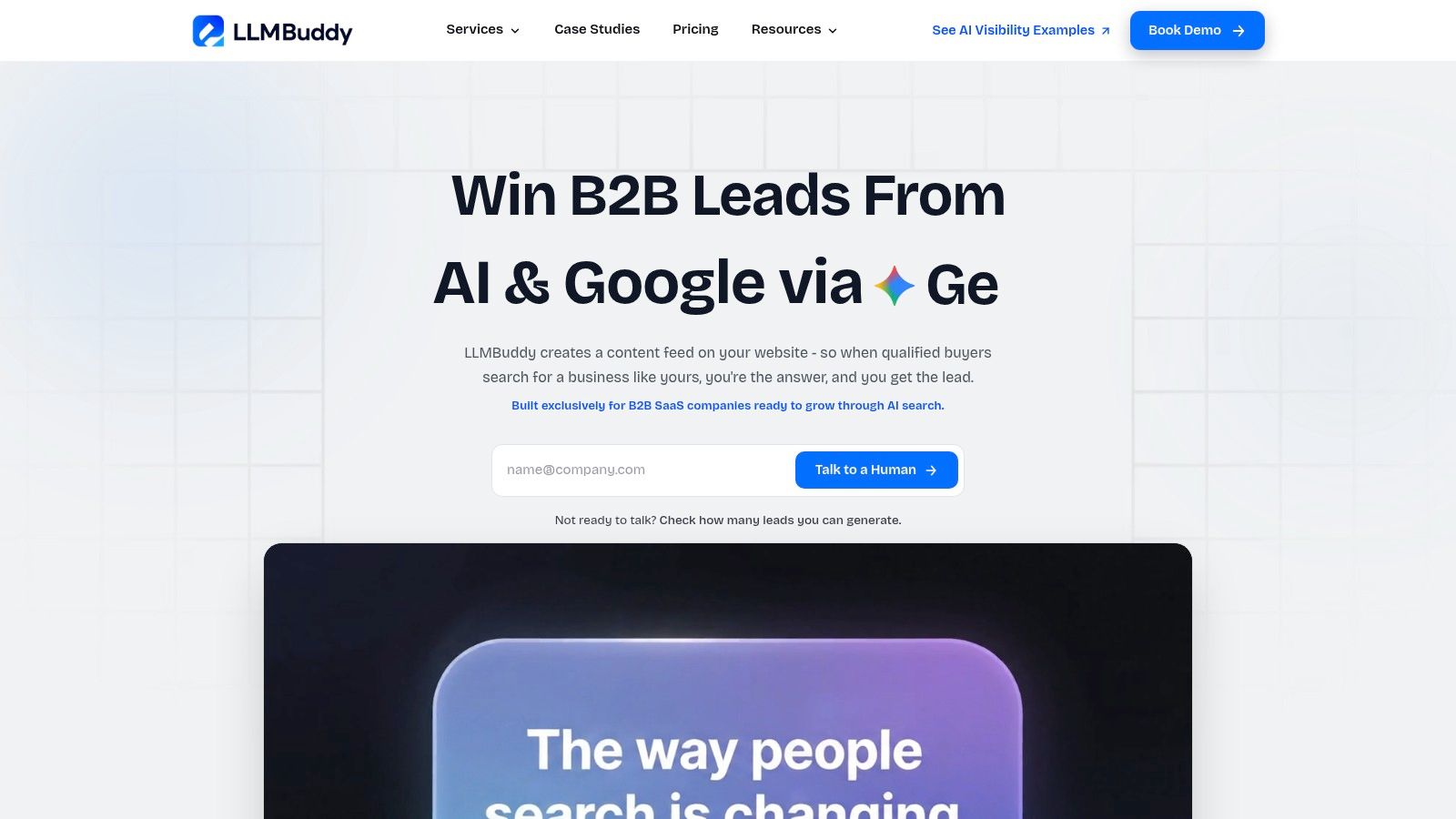
If your goal is to become the answer inside ChatGPT, Gemini, Perplexity, and Claude, LLMBuddy is the strongest pick on this list. It isn't a generic SEO suite trying to stretch into AI search. It's a GEO agency and monitoring platform built for B2B SaaS buying journeys, with work centered on entity clarity, topic mapping, citation pathways, AI-friendly content structure, schema, llms.txt, and ongoing visibility tracking.
That focus matters because traditional tools still miss where AI systems get confidence from. They track rankings. They don't consistently show why your competitor keeps getting named in AI answers while your brand gets ignored. LLMBuddy closes that gap with audits, implementation, and monitoring across the engines your buyers already use.
Why founders pick it
LLMBuddy's five-step approach is practical. First comes the AI visibility audit. Then entity and topic mapping. Then authority building and third-party citation development. Then content and technical changes. Then monitoring with weekly reporting. You can see the service stack inside LLMBuddy's AI SEO services.
We've seen this play out with clients. Chargebee recorded +74% AI visibility, Whatfix +84%, and Keka +82%. Those are the outcomes founders care about because visibility only matters if it shows up in pipeline conversations. LLMBuddy also reports an average +87% AI visibility growth in about 90 days across its programs, based on its own documented outcomes.
Practical rule: If your category gets researched through buyer questions instead of branded search, a GEO-first partner beats a generic SEO subscription.
A good example is citation engineering. LLMBuddy builds pathways through review platforms and industry sources such as G2, Gartner, and TechTarget so AI systems have more third-party validation to pull from. That's the difference between “we published content” and “the model mentions us.”
Best fit and trade-off
LLMBuddy is the right choice for B2B SaaS founders, CMOs, product marketing leaders, and growth teams in India, the US, and the UAE that want AI visibility tied to revenue, not vanity metrics. It also fits teams that need strategic help, not just software.
The trade-off is obvious. It's specialized. If you run an ecommerce brand or a local consumer business, this isn't your fit. Pricing is consultative, not public. But if your category depends on being recommended by AI assistants, LLMBuddy is the best rated SEO platform for B2B because it's built for the problem your buyers create.
2. Semrush
B2B teams that consolidate SEO work into one platform usually execute faster. Semrush earns its place because it covers the operational core well: technical audits, keyword research, rank tracking, content workflows, and competitor monitoring, as noted in Flowversity's review of SEO tools for SaaS companies.
That matters for a SaaS founder. One system means your SEO manager, content lead, and demand gen team can work from the same dataset instead of stitching together reports from four separate tools. You get clearer priorities, fewer handoff delays, and a search program that is easier to manage.
Semrush is strongest when your team needs breadth, speed, and decent reporting without the overhead of a heavier enterprise platform. If you are building the search function, not refining a mature one, this is a practical buy.
The limit is clear. Semrush was built for classic SEO. It helps you win blue links. It does not give B2B leaders a reliable view of how often their brand appears in AI-generated answers, which third-party citations shape those answers, or where category prompts exclude them. If AI search is already influencing your pipeline, run a separate AI search visibility audit for B2B SaaS alongside Semrush.
Best fit and trade-off
Semrush fits B2B SaaS growth teams that want one platform for keyword strategy, site health, position tracking, and competitive monitoring. It also fits founders who need an operating system their team can adopt quickly.
The trade-off is that Semrush is a platform, not an AI search strategy. Use it to manage traditional SEO execution. Add a GEO layer when your buyers start using ChatGPT, Gemini, Perplexity, or Copilot to shortlist vendors. That is the line B2B leaders need to understand. Semrush is a strong platform, but it is not the full answer anymore.
3. Ahrefs
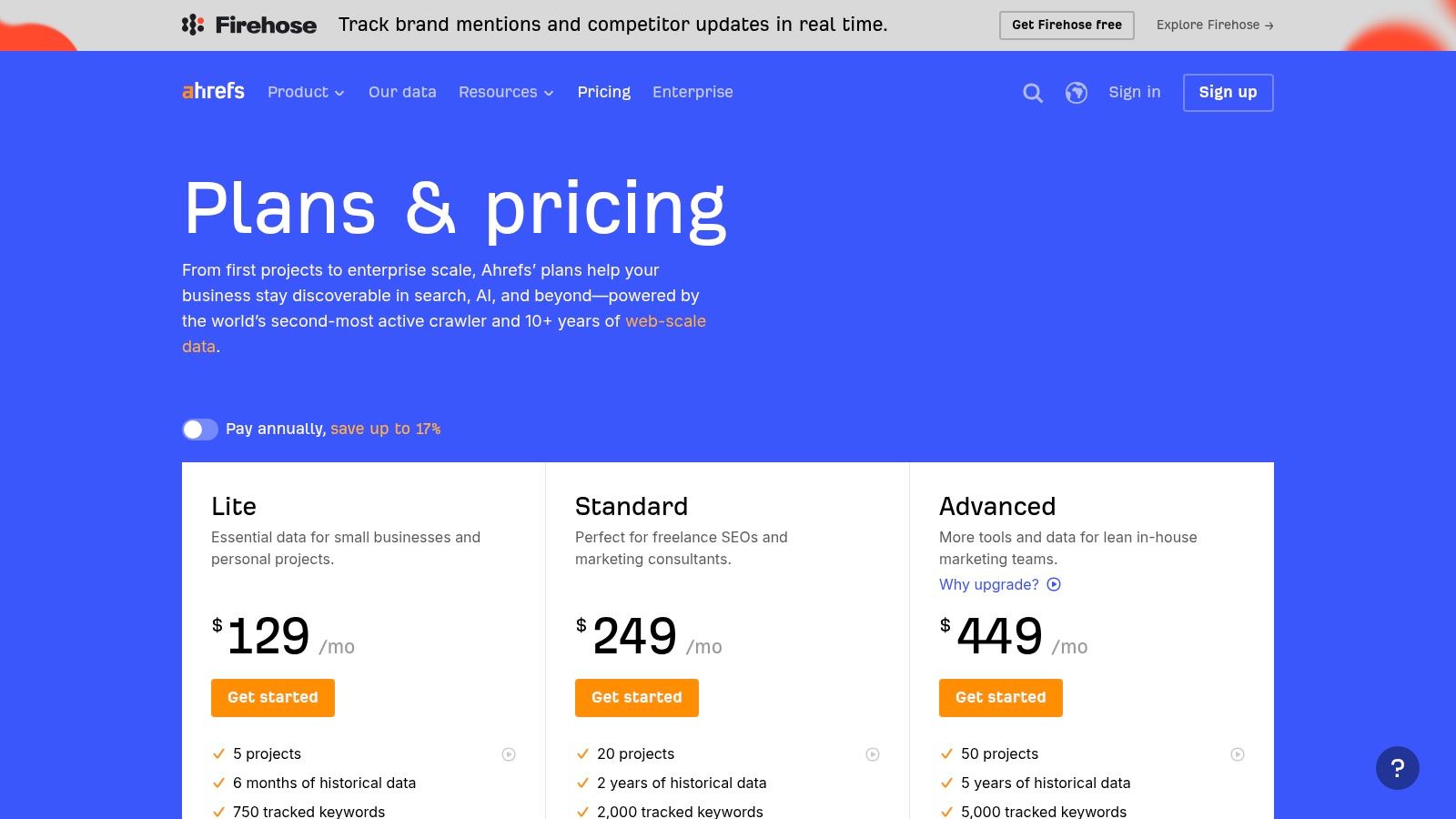
If your team wins through competitive research and link intelligence, Ahrefs is the better buy than Semrush. Among enterprise B2B SaaS teams, Ahrefs and Semrush are the most widely adopted all-in-one SEO platforms, but Ahrefs stands out for deep backlink analysis and Site Explorer capabilities, as noted in Scalix AI's review of SEO for B2B.
That distinction matters more than many groups recognize. In crowded SaaS categories, your fastest route to higher authority often isn't another blog post. It's finding the sites, pages, and domains already shaping category trust.
Why Ahrefs still matters
Ahrefs is at its best when your team needs sharp answers to competitive questions. Which competitor pages earn links? Which terms are they winning on? Which content gaps matter? Which domains cite them but ignore you?
Experienced B2B SEO teams acquire value through a strategic approach. They don't just watch positions; they model authority and attack the weak points in a rival's profile.
Link building still matters. In the tactics shared by practitioners, targeting sites with a domain rating of 40 or higher has been tied to stronger domain rating gains and rankings for money keywords within 90 days, according to this B2B SaaS link building walkthrough.
Who should buy Ahrefs
Buy Ahrefs if your category is link-sensitive, your team needs serious export and backlink research, or your strategy depends on aggressive competitor mapping. It's also a smart choice for founders who already have a strong content engine and now need authority building to push the business forward.
The downside is that entry plans can feel restrictive for larger sites. And if AI visibility is a board-level concern for you, Ahrefs alone won't give the full picture. It's a strong core SEO platform, not a complete GEO answer.
4. Conductor
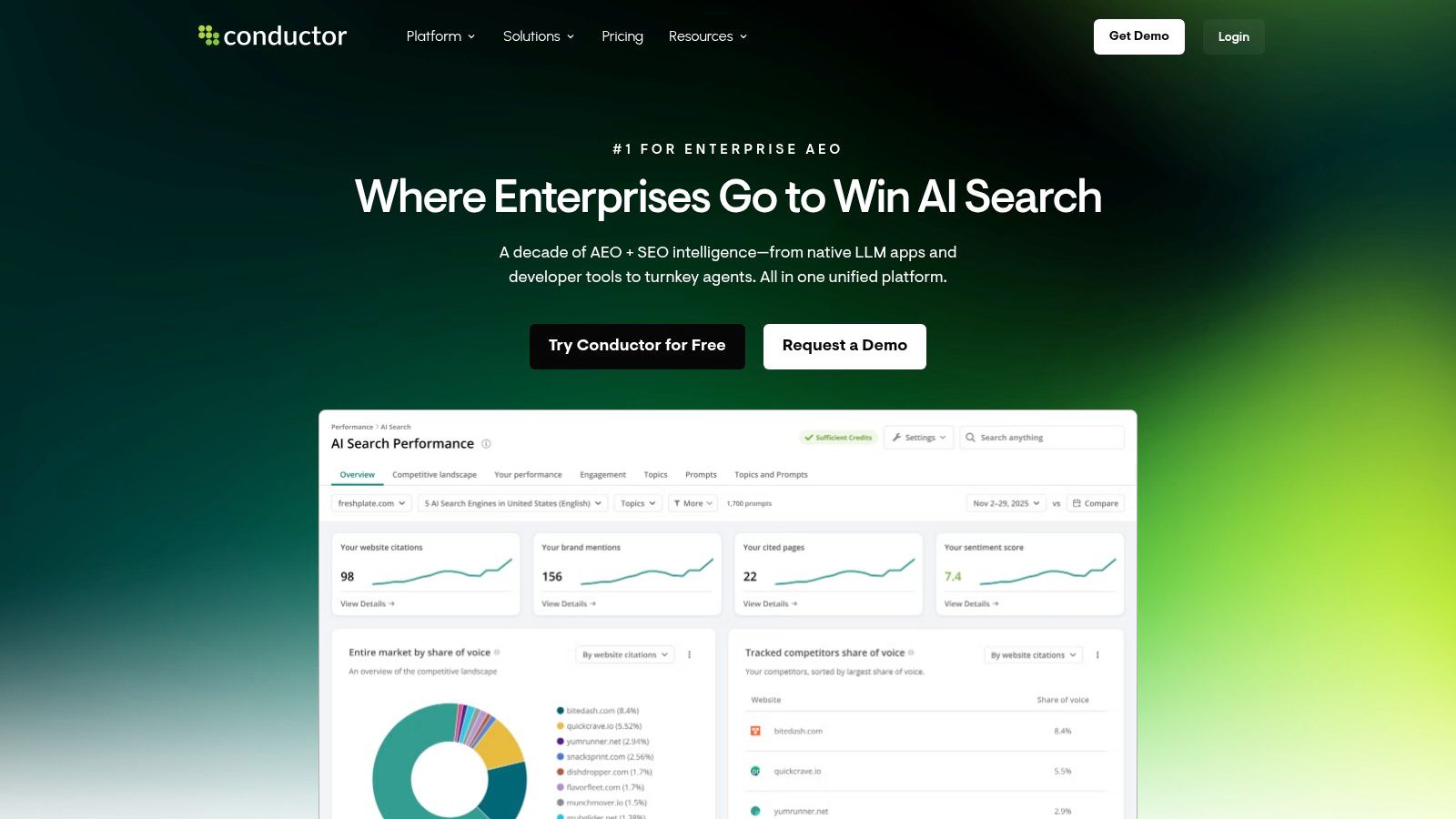
Conductor is for teams that have outgrown self-serve SEO software. If your org already runs cross-functional workflows between content, analytics, product marketing, and operations, Conductor fits that reality better than most tools on this list.
What makes it stand out is its clear push into answer engine workflows, APIs, and agent-based execution. That's a serious advantage for larger B2B SaaS companies trying to wire search data into broader systems instead of keeping it trapped inside one dashboard.
Best use case
Conductor makes sense when your team needs governance, workflows, and data portability. Mid-market and enterprise SaaS companies often hit that point once regional teams, business units, and leadership reporting all start asking different questions from the same search program.
If your internal team is also trying to connect classic SEO reporting with AI visibility work, Conductor becomes more attractive. But you'll still need a specialist layer for generative search execution in many cases, especially if your goal is AI assistant recommendation share. That's where AI visibility optimization from LLMBuddy fits better than another reporting dashboard.
- Buy Conductor if: You need enterprise workflow control, data integration, and AEO-aware reporting.
- Skip it if: You're an early-stage SaaS team that just needs faster execution.
- Reality check: Sales-led procurement and onboarding can slow momentum.
Conductor is not for everyone. But for larger SaaS organizations, it's one of the better bridges between old SEO ops and the AI search world.
5. BrightEdge
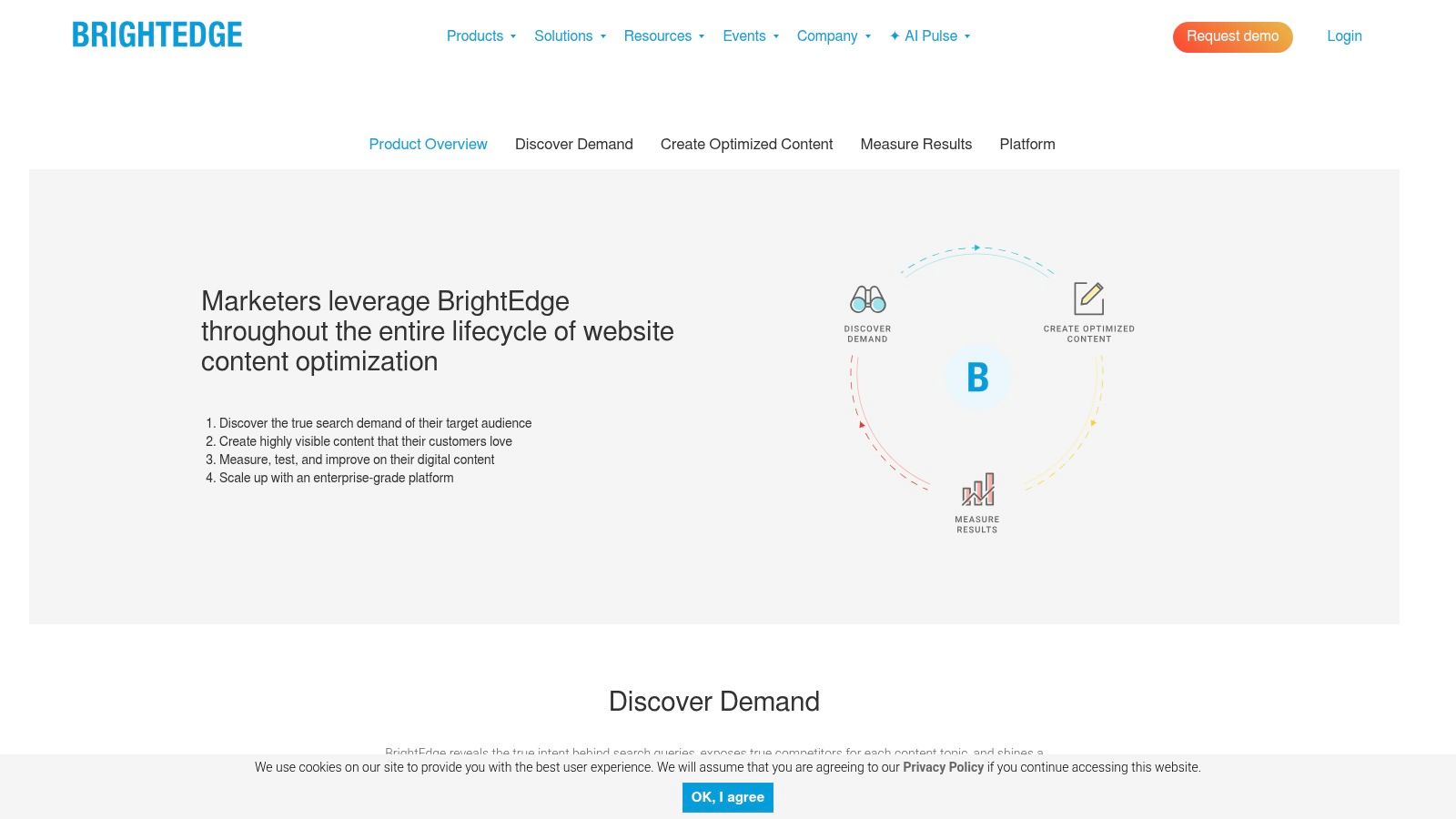
BrightEdge is built for enterprise reporting discipline. If your CMO needs polished dashboards, anomaly alerts, and board-friendly reporting, BrightEdge does that better than most founder-led teams usually need.
This is a platform for governance-heavy environments. It suits companies where search sits inside a larger digital performance function and where executives expect structured reporting, not just analyst-grade exports.
Where it fits
BrightEdge works best when many stakeholders need visibility into SEO performance without living inside the details. That includes executive teams, regional leaders, and content teams that need a common reporting layer.
For founders, the question is simple. Do you need executive governance or search growth? If you need the former, BrightEdge is a strong candidate. If you need the latter, especially in AI search, it can become too top-heavy without a sharper execution partner.
The platform matters less than the operating model. We've seen SaaS teams buy expensive enterprise software and still remain absent from ChatGPT and Perplexity because nobody fixed the citation and entity problems underneath.
BrightEdge is a solid choice for mature companies with reporting complexity. It's rarely the right first move for an Indian SaaS company still trying to win category demand efficiently.
6. seoClarity
seoClarity is a scale play. If your website is large, your category map is broad, and your team needs high-volume crawling and rank tracking, this is one of the more practical enterprise picks.
It suits B2B companies with heavy documentation, sprawling resource centers, multi-product architectures, or complex site ownership across teams. That's where crawl depth and large reporting ranges start to matter.
Why technical teams like it
The platform is strong for search programs that need recurring site diagnostics and broad keyword coverage without getting boxed in by small crawl limits. That makes it useful for SaaS companies with large content libraries and active engineering collaboration.
Its positioning is technical and operational. You buy seoClarity because your site complexity demands it, not because it's trendy. That makes it a good fit for platform teams and senior SEO operators.
- Strong fit: Large SaaS sites with many templates, sections, and reporting stakeholders.
- Less ideal: Lean growth teams that need category narrative, citations, and AI discoverability more than scale diagnostics.
- Decision lens: Buy it when crawl and rank operations are your bottleneck.
If your problem is scale, seoClarity deserves a hard look. If your problem is AI assistant invisibility, it won't solve that alone.
7. Botify
Botify is the technical SEO specialist on this list. It's built for teams dealing with indexation, rendering, crawl waste, and complex site structures. If your product docs, help center, and blog are fighting each other for crawl attention, Botify can surface the problem quickly.
That's why larger SaaS companies with developer-heavy environments often like it. It speaks to infrastructure, not just content.
What Botify does better
JavaScript rendering, log analysis, and indexability control are where Botify earns its place. If pages aren't getting discovered or updated properly, you need this level of visibility more than another keyword dashboard.
This is especially relevant for SaaS sites with large documentation hubs or international sections. A beautiful content plan means nothing if Google and AI crawlers don't consistently access the right pages.
Botify isn't a broad all-in-one growth platform. It's a technical weapon. Buy it if crawl efficiency is blocking performance. Don't buy it hoping it will solve authority, messaging, or AI recommendation problems.
8. Demandwell
Demandwell is one of the few options that speaks directly to B2B SaaS marketers instead of generic SEO teams. That vertical focus matters. Software companies don't need vague publishing workflows. They need repeatable content operations tied to pipeline.
That's where Demandwell earns attention. It combines planning, reporting, and support for SaaS teams that want a more guided motion.
Good for execution-focused teams
Demandwell is a better fit for content-led SaaS teams than for technical SEO specialists. If your internal challenge is consistency, planning, and sprint execution, it's more relevant than a raw enterprise suite.
For a founder, the question is whether your team needs tooling or enablement. Demandwell offers both. That can reduce setup friction for teams that don't want to build a search process from scratch.
The limitation is technical depth. If your site has rendering issues, serious backlink gaps, or AI visibility problems, Demandwell won't replace a stronger technical stack or a GEO partner. But if your content engine is weak, it can help you build discipline fast.
9. Clearscope
Clearscope remains one of the cleanest content optimization platforms for in-house teams. If your writers, PMMs, and SEO leads need a simple system for briefs, grading, and on-page improvement, Clearscope is easy to adopt and hard to mess up.
That simplicity is why many SaaS teams keep it in the stack even when they already use another platform for rank tracking and technical SEO. It solves a different problem. It helps content teams publish pages that are more likely to perform.
Where Clearscope helps most
Use Clearscope when your main bottleneck is content quality and consistency. It works well for comparison pages, solution pages, category pages, and long-form educational content. It also pairs naturally with AI content optimization support from LLMBuddy if your goal is not just Google performance but cleaner extraction and citation by LLMs.
The trade-off is obvious. Clearscope is not your crawler. It is not your backlink intelligence system. It is not your GEO platform. It's the content layer.
- Buy it for: Writer workflows, briefs, and content upgrades.
- Don't expect: Technical audits, authority building, or full AI visibility monitoring.
- Best stack position: Pair it with a stronger core SEO or GEO system.
For content-heavy B2B SaaS teams, Clearscope still earns its keep.
10. MarketMuse
MarketMuse is the best fit here for teams thinking in topics, not just keywords. If your category needs deep topical authority, old-school keyword lists won't get you there. You need to know which areas you've covered weakly, which clusters deserve expansion, and which aging assets deserve a rewrite.
That's the problem MarketMuse solves well. It helps content teams decide what to build next and what to update first.
Best use case
MarketMuse is strong for SaaS companies building category education, comparison content, and deep resource hubs. It's especially useful when your team already has a lot of content but weak internal prioritization.
According to Iriscale's review of top B2B SEO tools, modern B2B SEO benchmarking now gives more weight to authority modeling and competitive semantic mapping than isolated rank improvement. That's exactly why MarketMuse still belongs in a serious content stack.
The limitation is that it won't replace your crawler, your backlink tool, or your AI visibility monitoring. It works best as your planning and authority-building layer inside a broader system.
Top 10 B2B SEO Platforms Comparison
| Product | Core offering | Quality (★) | Pricing / Value (💰) | Target audience (👥) | Unique strength (✨) |
|---|---|---|---|---|---|
| LLMBuddy 🏆 | GEO & AI search visibility, audit → entity mapping → citation engineering → monitoring | ★★★★★ (avg +87% AI visibility ~90d) | 💰 Audits, growth retainers & enterprise; free 15‑page audit / 30‑min call | 👥 B2B SaaS founders, growth, PMMs, enterprise | ✨ Purpose‑built B2B SaaS GEO; llms.txt + schema + citation pathways + single‑pane AI Visibility platform |
| Semrush | All‑in‑one SEO + AI search visibility & competitive intel | ★★★★ | 💰 Tiered plans (clear scale); add‑ons increase cost | 👥 Broad B2B SEO & marketing teams | ✨ Breadth: keywords, backlinks, AI mentions, APIs |
| Ahrefs | Deep backlink & competitive research + Brand Radar AI | ★★★★ | 💰 Subscription tiers; clear limits per plan | 👥 Research‑focused SEO teams & agencies | ✨ Industry‑leading link index; strong competitive intelligence |
| Conductor | Enterprise AEO + content workflows + agent/API integrations | ★★★★ | 💰 Quote‑based; usage/AI credits | 👥 Mid‑market & enterprise B2B orgs | ✨ AgentStack & APIs to plug AEO data into internal AI tools |
| BrightEdge | Enterprise SEO & content performance with executive reporting | ★★★★ | 💰 Custom enterprise pricing (quote) | 👥 Large B2B orgs needing governance & exec reporting | ✨ Anomaly detection & story‑building dashboards for execs |
| seoClarity | Unlimited crawling, large‑scale rank tracking & AI content workflows | ★★★★ | 💰 Quote‑based; enterprise packaging | 👥 Very large B2B sites with big keyword inventories | ✨ Unlimited crawls & large data exports for scale |
| Botify | Technical SEO: JS rendering, log analysis, indexability management | ★★★★ | 💰 Quote‑based; enterprise focus | 👥 Tech‑heavy B2B SaaS (docs & complex sites) | ✨ Googlebot‑like crawler + activation to accelerate indexation |
| Demandwell | B2B SaaS SEO software + coaching; sprint‑based content workflows | ★★★★ | 💰 Sales‑assisted pricing | 👥 B2B SaaS marketers seeking repeatable pipeline | ✨ Verticalized sprints + coaching to turn SEO into revenue |
| Clearscope | Content intelligence: briefs, grading, prompt & AEO support | ★★★★ | 💰 Transparent plans; unlimited users on paid tiers | 👥 Content teams, writers, agencies | ✨ Easy briefs & content grading; prompt tracking for AEO |
| MarketMuse | AI topic modeling, content inventory & prioritization metrics | ★★★★ | 💰 Sales‑assisted pricing; limited free tier | 👥 Content strategists building topical depth | ✨ Topic Authority & Personalized Difficulty for prioritization |
Your Next Step Request a Complimentary AI Search Audit
B2B buyers no longer rely on one search engine. They compare vendors across Google, ChatGPT, Gemini, Perplexity, and Claude. If your evaluation process only checks keyword rankings, you are missing part of the market.
Start with diagnosis.
A founder under pressure usually buys an SEO platform too early. That creates a predictable mess. The team gets more dashboards, more alerts, and more reports, but still cannot explain why competitors keep getting mentioned in AI answers during high-intent research.
The right evaluation framework has two layers. First, can the platform support core SEO execution such as technical fixes, keyword research, content planning, and reporting? Second, can it measure and improve your visibility inside AI-generated recommendations? If a tool only solves the first layer, it is not a complete answer for a B2B SaaS company that depends on category consideration and pipeline growth.
That gap shows up fast in real audits. A company can rank well on Google for commercial terms and still disappear in AI summaries. The usual causes are weak entity signals, thin third-party references, poor comparison content, inconsistent structured data, and weak retrieval cues across the site. Traditional SEO platforms help with parts of that problem. They do not give most SaaS leaders a full GEO operating picture.
That is the difference between a software purchase and a search strategy.
Semrush and Ahrefs are still strong choices for core SEO. Conductor, BrightEdge, seoClarity, and Botify make sense when scale, governance, and technical depth matter. Clearscope and MarketMuse help content teams produce better assets. Use them for what they do well. Then ask the harder question. Who is accountable for getting your brand cited, retrieved, and recommended by AI systems during buyer research?
LLMBuddy is built for that second layer. The work goes beyond rank tracking. It covers AI search audits, cross-engine visibility tracking, entity and topic mapping, citation pathway development, llms.txt guidance, structured data improvements, retrieval-friendly content, and weekly monitoring tied to buying queries that influence pipeline.
If you need clarity before you commit budget to another platform, request an audit first. LLMBuddy helps B2B SaaS companies turn AI visibility into pipeline with audits, GEO strategy, citation building, and ongoing monitoring. Request a free AI search audit.
Ankur Pandey and the LLMBuddy team use this process to show founders where demand capture is breaking, which tools can close the gap, and where a specialized GEO partner is the better investment.